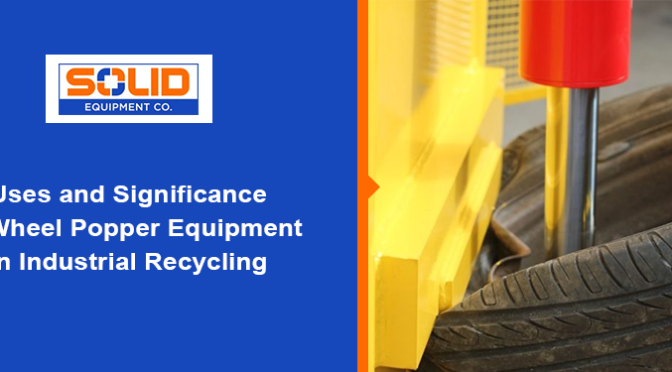
Uses and Significance of Wheel Popper Equipment in Industrial Recycling

Waste management has become a crucial aspect of modern industry, with the increased awareness of the need to reduce waste and recycle materials. Recycling equipment plays a vital role in this process, and one such piece of equipment that has gained popularity in recent years is the wheel popper.

It has revolutionized the recycling industry by providing an efficient and safe way to separate tires from their rims. This equipment is used in tire recycling facilities to increase the recycling rate of used tires and reduce waste.

In this blog, we will discuss the uses and significance of wheel popper equipment in industrial recycling.

Uses of Wheel Poppers

The primary use of a wheel popper is to separate tires from their rims. It is necessary because the two components have different recycling processes.

Tires must be shredded or ground into small pieces for use in various products, such as rubber mulch, crumb rubber, or asphalt. Conversely, the rims need to be melted down and turned into new metal products.

The process of separating tires from their rims can be a challenging and time-consuming task. It requires considerable force to break the bond between the tire and rim, which is why manual methods are impractical.

Wheel poppers use hydraulic pressure to apply the necessary force to separate the two components. It results in a much more efficient process that can handle a high volume of tires and rims.

Wheel poppers come in different sizes and capacities, allowing them to handle a range of tire and rim sizes. They also have safety features, such as guards and emergency stops, to prevent accidents and ensure safe operation. Some models can process up to 120 tires per hour, making them ideal for large recycling facilities.

Significance of Wheel Poppers

The use of wheel poppers in industrial recycling has several significant benefits.

Safe and Efficient Processing of Used Tires

Tires can be challenging to handle, and manually separating them from their rims can result in injuries. Wheel poppers eliminate this risk by providing a safe and automated process that requires minimal manual intervention.

Increase the Recycling Rate of Used Tires

Separating the tires from their rims enables the two components to undergo different recycling processes. It increases the number of materials that can be recycled and reduces waste.

Help Reduce the Environmental Impact of Used Tires

Tires take a long time to decompose, and when they are not disposed of properly, they can release harmful chemicals into the environment. Recycling tires reduces the amount of waste sent to landfills and helps to conserve natural resources.

A Source of Income for Tire Recycling Facilities

The processed tires can be sold to manufacturers who use them to create new products, while the rims can be melted down and sold as scrap metal. It creates a circular economy where waste is turned into new products, providing economic benefits and reducing the reliance on virgin materials.

Wheel poppers are an essential piece of equipment for any tire recycling facility. As the demand for sustainable waste management practices grows, wheel poppers will play an increasingly important role in industrial recycling.

Solid Equipment Company is a leading recycling machinery and used recycling equipment supplier in the United States. We offer a wide range of recycling equipment and work closely with businesses to understand their unique needs and requirements and provide appropriate solutions that deliver excellent results.

Whether you are looking for a wheel popper for your business or any other piece of industrial equipment, check out the range at Solid Equipment Company. We are committed to providing reliable equipment that meets the highest quality and performance standards.

Contact us today to learn more about our products and services and start your journey towards a more sustainable future.
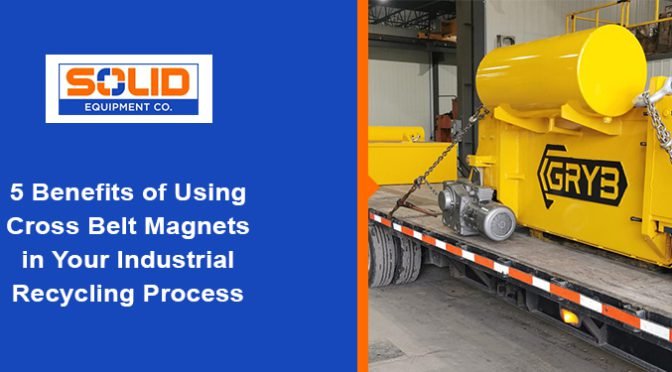
5 Benefits of Using Cross Belt Magnets in Your Industrial Recycling Process

Cross belt magnets, or cross belt magnetic separators or conveyors, are a vital tool in many industrial processes. They use powerful magnets to attract and remove ferrous materials from a moving conveyor belt.

Recycling is an essential process that significantly impacts the environment and the economy. It involves collecting, sorting, processing, and converting waste materials into new products. However, recycling can be challenging and complicated, especially when dealing with ferrous metals. It is where this specific piece of equipment comes in handy.

These machines offer several benefits that make them indispensable in the recycling industry.

Efficient Separation of Ferrous Metals

One of the significant benefits of using cross belt magnets in the recycling process is their ability to separate ferrous metals from non-ferrous metals efficiently. Ferrous metals are magnetic, which means a magnetic field can easily attract them. Cross belt magnets use a powerful magnetic field to attract and separate ferrous metals from other materials. It makes the process fast, efficient, and reliable and helps ensure we do not lose valuable materials during recycling.

Improved Product Quality

These conveyors help to remove contaminants such as metal pieces, screws, and bolts from the recycling process, ensuring that the end product is of high quality, free from impurities and contamination, and meets the required standards.

Increased Safety

In the absence of magnets, workers would have to manually sort through materials, which could be dangerous, especially when dealing with sharp or heavy objects. Cross belt magnets help to eliminate the need for manual sorting, reducing the risk of accidents and injuries in the workplace.

Cost-Effective

These conveyors help to reduce the cost of recycling by increasing the efficiency of the process. As a result, the recycling process is faster and more reliable, reducing the time and labor required to sort materials manually. It translates to reduced labor costs, increased productivity, and improved profitability.

Environmentally Friendly

The use of cross belt magnets is also environmentally friendly. Recycling helps conserve natural resources by reducing the need for new raw materials. This decreases the amount of waste that ends up in landfills, and thereby, reducing the impact of waste on the environment.

By using this equipment in the recycling process, companies can contribute to a more sustainable future by reducing their carbon footprint and promoting environmental responsibility.

With the increasing demand for sustainable and responsible waste management practices, cross-belt magnets are becoming more important than ever. Investing in this essential piece of equipment is wise for any company committed to recycling and sustainable waste management practices.

If you are interested in incorporating cross belt magnets into your industrial process in the United States, Solid Equipment Company can help. We are a leading recycling and waste reduction equipment supplier in the United States. We offer a range of high-quality cross belt magnets, cross belt magnetic conveyors, etc.,  to suit various industrial applications, and our experienced team can help you select the right equipment for your needs. Contact us today to learn more about our products and services.

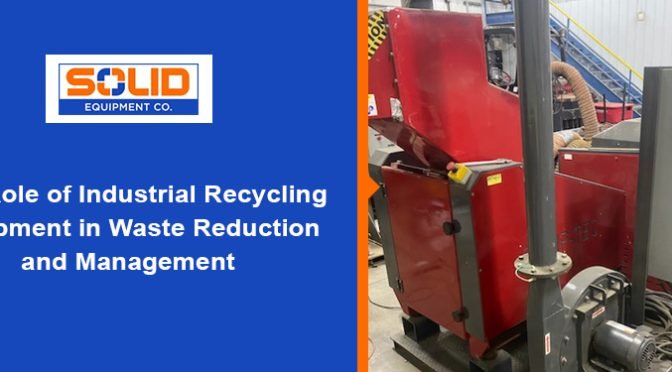
The Role of Industrial Recycling Equipment in Waste Reduction and Management

Industrial recycling equipment encompasses a broad range of machines designed to process waste and convert it into reusable materials. These machines are typically used in industrial settings, such as manufacturing plants, construction sites, and warehouses, that produce large amounts of waste. By recycling this waste, these facilities can reduce their environmental footprint and save money on disposal costs.

With the world’s population growing and consumption levels rising, waste management has become a critical concern for environmentalists, governments, and businesses alike.

Hence, in recent years, the importance of industrial recycling equipment in reducing waste and managing it more efficiently has become increasingly apparent.

Types of Industrial Recycling Equipment

Some of the most common types of industrial recycling equipment include:

Shredders

Shredders break down large objects, such as furniture, appliances, and construction materials, into smaller pieces that can be easily transported and recycled.

Balers

Balers compress waste materials, such as cardboard, plastic, and metal, into compact bales that can be easily transported and recycled. It reduces the amount of space required for waste storage and makes it easier to transport waste materials to recycling facilities.

Compactors

Compactors compress waste materials, such as foam, rubber, and textiles, into compact blocks that can be easily transported and recycled.

Crushers

Crushers break down waste materials, such as concrete and asphalt, into smaller pieces that can be reused in construction projects.

Granulators

Granulators process plastics and other materials, breaking them down into small pellets that can be used to produce new products.

Benefits of Industrial Recycling Equipment

The use of industrial recycling equipment has several benefits for waste reduction and management:

Reducing Landfill Waste

By recycling materials, facilities can reuse resources that would otherwise be discarded, reducing the amount of waste that ends up in landfills. It reduces the environmental impact of resource extraction and helps to conserve natural resources.

Greenhouse Gas Emissions Reduction

Landfills are a significant source of methane, a potent greenhouse gas contributing to climate change. By reducing the amount of waste in landfills, facilities can help reduce their carbon footprint and mitigate the effects of climate change.

Cost Savings

Recycling materials can save facilities money on waste disposal costs. Many businesses must pay fees for waste disposal, which can add up quickly, especially for facilities that produce large amounts of waste.

By recycling materials, facilities can reduce the amount of waste that needs to be disposed of, ultimately lowering disposal costs.

Resource Conservation

Recycling materials helps to conserve natural resources by reducing the need for new raw materials to be extracted from the earth. It can help to reduce the environmental impact of resource extraction and preserve resources for future generations.

Compliance with Regulations

Many countries have regulations that require businesses to recycle certain materials, such as electronic waste or hazardous materials. Using industrial recycling equipment can help companies to comply with these regulations, avoiding fines and other penalties.

Choosing the right industrial recycling equipment for a facility’s specific needs can help maximize these benefits, ultimately contributing to a more sustainable future.

Solid Equipment Company is a leading recycling machinery and used recycling equipment supplier in the United States.

We offer a wide range of recycling equipment, including scrap handling equipment, balers, shredders, and crushers from the industry’s top brands. We work closely with businesses to understand their unique needs and requirements and provide appropriate solutions that deliver excellent results.

Solid Equipment Company is the right choice if you’re looking for a reliable supplier for recycling machinery and used recycling equipment in the USA. We are committed to providing reliable equipment that meets the highest quality and performance standards.

Contact us today to learn more about our products and services and start your journey towards a more sustainable future.