Category Archives: Cross Belt Magnets

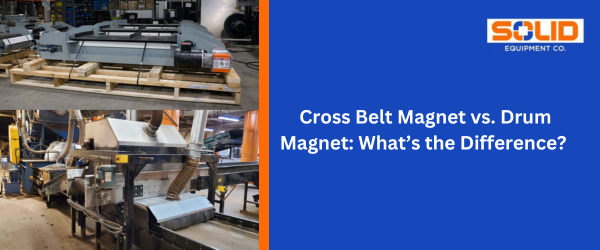
Cross Belt Magnet vs. Drum Magnet: What’s the Difference?

In scrap yards, MRFs, and industrial recycling facilities, choosing the right magnetic separation equipment directly affects recovery purity, uptime, and ROI. If you’re deciding between a cross belt magnet and a drum magnet, the real question isn’t which is better; it’s which fits your material flow and recovery goals.

Both are essential pieces of industrial magnetic separation equipment, but they function differently within ferrous metal recovery systems.

How a Cross Belt Magnet Works

A cross belt magnet (also called anoverband magnet) is suspended above a conveyor belt. As material passes underneath, the magnet pulls ferrous metals upward and away from the material stream. A self-cleaning belt then carries the captured metal to the side and discharges it

Best Applications

A cross belt magnet performs well in:

  • Shredded automobiles
  • Auto shred residue
  • MSW
  • Construction debris
  • E-scrap and electronic scrap
  • High-volume scrap metal processing

Because it sits above the conveyor, it works well as a continuous, self-cleaning separator in high-throughput systems.

Key Performance Characteristics

  • Continuous operation
  • Handles variable feed sizes
  • Ideal for primary separation
  • Moderate footprint (over conveyor)
  • Requires structural mounting and power for belt drive

For many facilities, a cross belt magnet for sale is the first line of defense to remove ferrous metals before downstream processing.

How a Drum Magnet Works Best Applications

Drum separator magnets are excellent for:

  • Clean shredded scrap
  • Wire recovery lines
  • E-scrap refinement
  • Secondary or staged separation
  • Applications requiring higher purity

Because material directly contacts the drum, separation can be more precise.

Key Performance Characteristics

  • Compact installation footprint
  • Lower profile than overhead systems
  • Strong control of discharge
  • Ideal for staged or finishing separation
  • Less structural overhead support required

If your goal is higher recovery purity in refined streams, a drum magnet for sale often makes sense.

Side-by-Side Comparison

Feature  Cross Belt Magnet  Drum Magnet 
Position in Flow Suspended over conveyor Inline, at discharge or chute
Cleaning Self-cleaning belt Self-cleaning via rotation
Throughput High-volume primary separation Controlled, refined separation
Installation Requires overhead mounting Compact, integrated
Ideal Material Shredded automobiles, C&D, MSW Clean scrap, wire, e-scrap
Separation Stage Primary removal Secondary or finishing stage


How to Choose the Best Magnet for Scrap Metal Separation

1. Material Type

  • Heavy shredded automobiles or C&D debris? Cross belt magnet
  • Clean wire, electronic scrap, or refined e-scrap? Drum magnet
  • Mixed MSW or unpredictable feedstock? Cross belt magnet

2. Desired Recovery Purity

  • Higher initial volume capture → Cross belt magnet
  • Higher final purity → Drum separator magnets

3. Continuous vs. Staged Separation

  • Need continuous, hands-off removal? Cross belt magnet
  • Need controlled, staged refinement? Drum magnet

4. Space & Conveyor Layout

  • Limited overhead clearance? Drum separator magnets for sale may fit better
  • Long conveyor lines with room above? Cross belt systems integrate easily

A Trusted Supplier for Equipment Sourcing and ROI

Whether you are investing in new systems or exploring  used recycling equipment for sale, partnering with a t rusted industrial equipment supplier matters.

Solid Equipmentsupports facilities wi th:

Final Takeaway

The difference between a cross belt magnet and a drum magnet comes down to position, performance role, and recovery goals. A cross belt magnet excels at high-volume, continuous primary separation. A drum magnet refines material for higher purity output.

For most operations focused on uptime, purity, and ROI, the best solution is often both — working together to maximize metal recovery while keeping your metal recycling machine running efficiently.
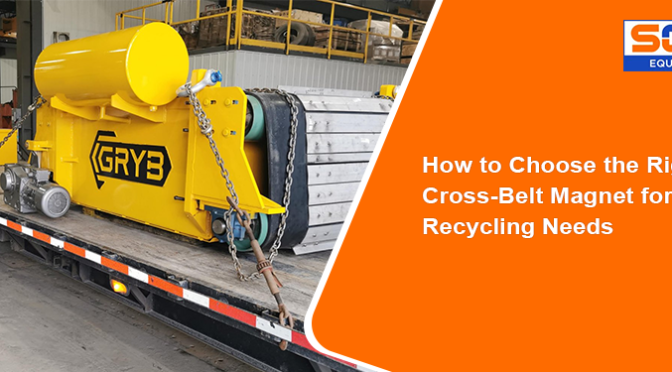
How to Choose the Right Cross-Belt Magnet for Your Recycling Needs

Cross-belt magnet, a powerful magnetic separator designed to extract ferrous materials from various recycling processes

Welcome to the world of recycling, where innovation and technology join hands to create a sustainable future. As recycling gains momentum globally, industries continually seek efficient ways to extract and recycle materials from the waste stream. One marvel of modern engineering is the industrial cross-belt magnet, a powerful magnetic separator designed to extract ferrous materials from various recycling processes.

In this informative blog, we will guide you through the process of selecting the right cross-belt magnet for your specific recycling needs. Whether you’re new to the concept or seeking an upgrade, our comprehensive guide will help you make an informed decision.

Understanding Cross-Belt Magnets

Before delving into the selection process, it’s essential to grasp the concept of cross-belt magnets. These industrial cross-belt magnets are designed to be mounted over conveyor belts. This creates a magnetic field that efficiently attracts and lifts ferrous materials such as iron, steel, and other magnetic particles from the waste stream.

This process ensures the extracted materials can be recycled and repurposed, preventing them from ending up in landfills and causing environmental harm.

Evaluate Your Recycling Needs

You must first assess your recycling requirements to choose the right cross-belt magnet equipment.

Consider the type and volume of materials you need to extract, the size of the conveyor belt, and the speed at which the belt operates. By understanding your specific needs, you can narrow down suitable equipment for your facility.

Size and Strength Matters

The size and strength of the cross-belt magnet play a crucial role in its efficiency. For heavy-duty industrial recycling, you’ll require a more potent magnet capable of handling large quantities of materials.

Conversely, a smaller and more affordable cross-belt magnet may suffice if you deal with smaller loads. Ensure that the magnetic field strength aligns with the type of materials you intend to extract.

Consider the Magnetic Belt Width

The width of the magnetic belt is an essential factor that impacts the magnet’s performance. Ideally, the belt’s width should match the width of the conveyor belt to ensure maximum coverage and extraction efficiency. Be sure to inquire about available sizes when exploring cross belt magnets for sale.

Opt for Durability and Maintenance

When investing in cross belt magnet equipment, durability and maintenance are paramount. Look for magnets constructed from high-quality materials that can withstand the rigors of industrial recycling operations.

Consider the ease of maintenance, such as cleaning procedures and replacement of components. A well-maintained magnet ensures optimal performance and longer service life.

Safety Features

Safety should never be compromised in any industrial setting. When selecting a cross-belt magnet, inquire about safety features such as self-cleaning mechanisms, emergency stop functions, and monitoring systems. These features not only protect your employees but also contribute to the overall efficiency of the recycling process.

Energy Efficiency

In today’s eco-conscious world, energy efficiency is a crucial consideration. Opt for a cross-belt magnet that consumes minimal power while delivering superior performance. It not only reduces your carbon footprint but also helps cut down operational costs.

Solid Equipment Company: Your Trusted Industrial Recycling Equipment Supplier

If you’re unsure about the specific requirements of your recycling facility or the ideal cross-belt magnet for your needs, don’t hesitate to consult with industry experts. At Solid Equipment Company, we have experienced professionals who can guide you through the selection process and provide valuable insights.

And for all your industrial recycling equipment needs, including top-notch cross-belt magnets for sale, check us out – Solid Equipment Company – the leading supplier of industrial recycling equipment in the US. Together, let’s create a sustainable future through recycling innovations. Contact us today for more information.

cross-belt magnet supplier
Our experienced professionals can guide you through the selection process and provide valuable insights

More to read in Solid Equipment Company Blog

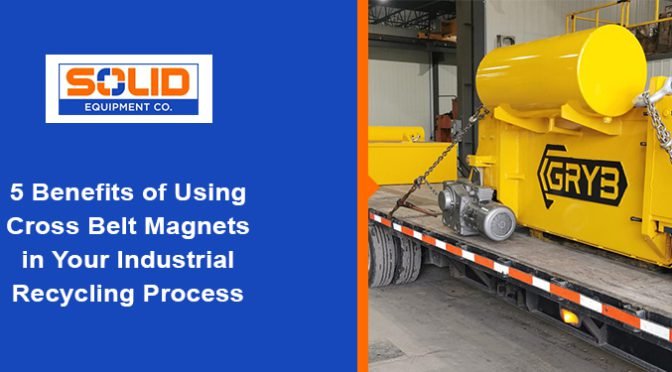
5 Benefits of Using Cross Belt Magnets in Your Industrial Recycling Process

How Self-Cleaning Magnets Can Improve the Efficiency of Your Scrap Handling Process

A Guide to Finding Reliable Suppliers for Recycling Machinery and Equipment in the USA

5 Benefits of Using Cross Belt Magnets in Your Industrial Recycling Process

Cross belt magnets, or cross belt magnetic separators or conveyors, are a vital tool in many industrial processes. They use powerful magnets to attract and remove ferrous materials from a moving conveyor belt.

Recycling is an essential process that significantly impacts the environment and the economy. It involves collecting, sorting, processing, and converting waste materials into new products. However, recycling can be challenging and complicated, especially when dealing with ferrous metals. It is where this specific piece of equipment comes in handy.

These machines offer several benefits that make them indispensable in the recycling industry.

Efficient Separation of Ferrous Metals

One of the significant benefits of using cross belt magnets in the recycling process is their ability to separate ferrous metals from non-ferrous metals efficiently. Ferrous metals are magnetic, which means a magnetic field can easily attract them. Cross belt magnets use a powerful magnetic field to attract and separate ferrous metals from other materials. It makes the process fast, efficient, and reliable and helps ensure we do not lose valuable materials during recycling.

Improved Product Quality

These conveyors help to remove contaminants such as metal pieces, screws, and bolts from the recycling process, ensuring that the end product is of high quality, free from impurities and contamination, and meets the required standards.

Increased Safety

In the absence of magnets, workers would have to manually sort through materials, which could be dangerous, especially when dealing with sharp or heavy objects. Cross belt magnets help to eliminate the need for manual sorting, reducing the risk of accidents and injuries in the workplace.

Cost-Effective

These conveyors help to reduce the cost of recycling by increasing the efficiency of the process. As a result, the recycling process is faster and more reliable, reducing the time and labor required to sort materials manually. It translates to reduced labor costs, increased productivity, and improved profitability.

Environmentally Friendly

The use of cross belt magnets is also environmentally friendly. Recycling helps conserve natural resources by reducing the need for new raw materials. This decreases the amount of waste that ends up in landfills, and thereby, reducing the impact of waste on the environment.

By using this equipment in the recycling process, companies can contribute to a more sustainable future by reducing their carbon footprint and promoting environmental responsibility.

With the increasing demand for sustainable and responsible waste management practices, cross-belt magnets are becoming more important than ever. Investing in this essential piece of equipment is wise for any company committed to recycling and sustainable waste management practices.

If you are interested in incorporating cross belt magnets into your industrial process in the United States, Solid Equipment Company can help. We are a leading recycling and waste reduction equipment supplier in the United States. We offer a range of high-quality cross belt magnets, cross belt magnetic conveyors, etc.,  to suit various industrial applications, and our experienced team can help you select the right equipment for your needs. Contact us today to learn more about our products and services.